
Real Betis swapping Pablo García for Dani Ceballos is a travesty that highlights football’s warped priorities
02.09.26, 20:31 Updated 02.09.26, 20:31 7 Minute Read

Rahul Lakhani
Real Betis are usually one of the most admirable clubs in Spain. With one of the most passionate fanbases, a team filled to the brim with technical, attacking talent, and an identity that feels bigger than just what happens on the pitch, they are a club often seen as an antithesis to the grim realities of modern football.
However, two deals they completed on deadline day have sparked anger, with many fans outraged at the decision to sell Pablo García to Racing Santander.
His departure was not an unexpected development, with García linked to Hull City and Olympiakos in recent weeks, but it is a heartbreaking one in several ways.
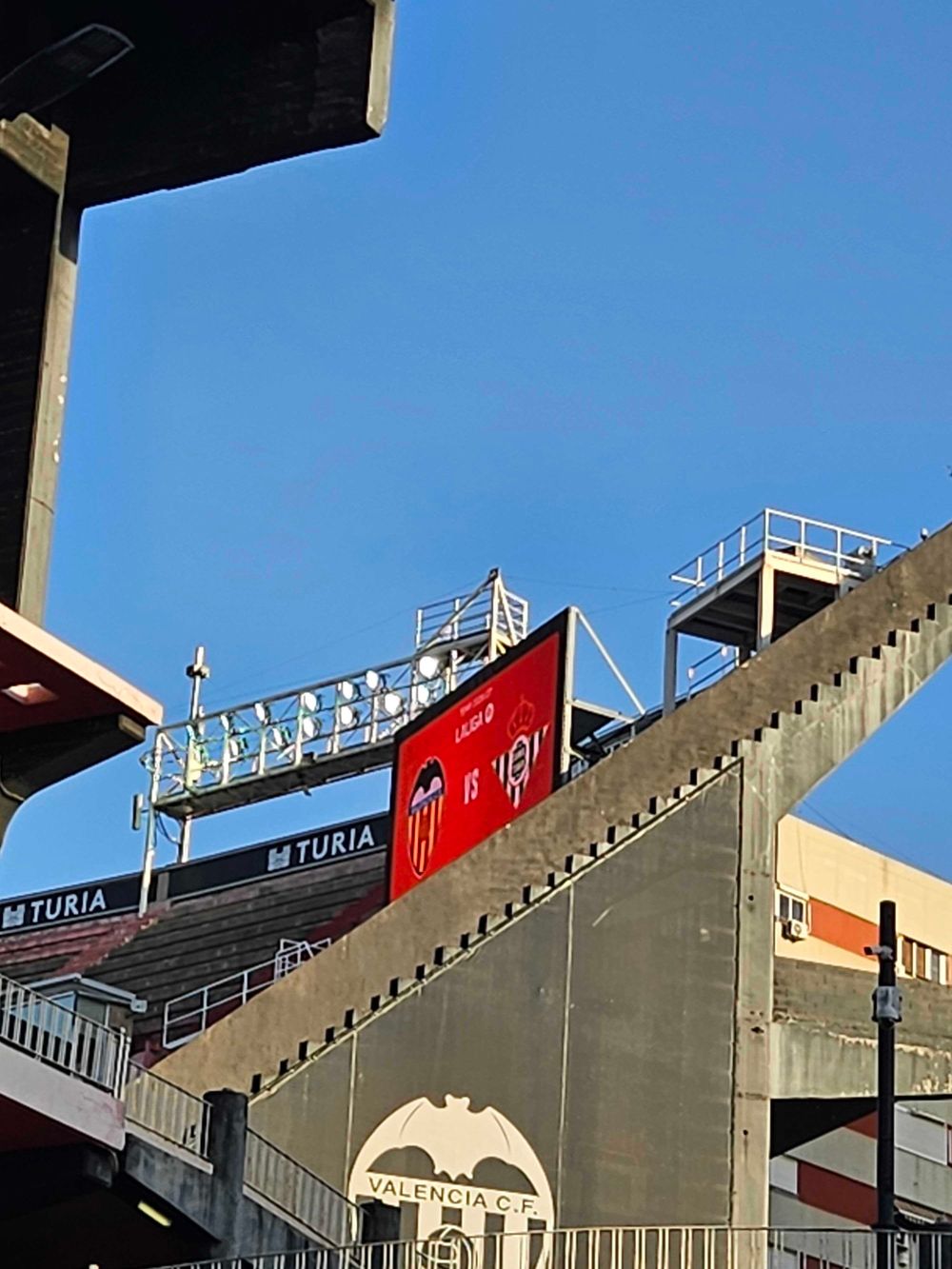
I was at Mestalla to see García score his first LaLiga goal for Betis last week, a poignant moment which then saw him greet his tearful mother at Sevilla airport a few hours later. It was a dream come true.


García was born in Sevilla to a family of Betis fanatics. At the age of six, he joined the club’s academy. Betis has been his whole life: he bleeds green and white.
After progressing his way through the ranks as a truly outstanding talent, it would only be a matter of time before his first-team breakthrough. The 2023-24 season saw him score 43 goals in 38 games as a winger.
He had scored at every single youth category for Betis over the last 14 years. That goal at Mestalla felt significant: it was the culmination of his life’s work.
All the goals he scored at youth level were leading to that moment. It should have been the start of a special journey as a member of the first-team squad at Betis.
A week later, he was in tears again. The dream was over. García was being sold to Real Racing Club for a fee of €5.5m for 50% of his rights.
He would have to relocate from Sevilla to Santander in the north of Spain.
The reasons? Dani Ceballos and the warped priorities of modern football.
Why have Real Betis sold Pablo García?
The clips of García and his mother in tears, both after his goal at Mestalla and shortly after his Betis exit, have caused a stir in the footballing world well beyond Triana or even LaLiga.
It is a story which has shocked football fans across the world, many of whom may never have heard of García before.
Pablo Garcia crying as he leaves his boyhood club Real Betis, for Racing Santander.
— La Liga London (@LaLigaLondon) September 1, 2026
As I've said throughout the last few weeks, I really don't understand why Betis were so keen to force him out for a quick profit. https://t.co/D4E6QMzGTm
The reason behind his sale was that Betis needed space in their salary limit. Nelson Deossa, Giovani Lo Celso and Rodrigo Riquelme were among the players linked with an exit to facilitate this.
No moves materialised for any of them, with Riquelme now finding his form as a starter.
Space on this salary limit was necessary in order to bring back one of their former youth products: Ceballos.
This meant that García was the one pushed to the exit door, with the immediate injection of his transfer fee, as well as his removal from the wage bill, making just enough room to allow free-agent Ceballos to make his long-awaited return, but already, this has not gone to plan.
Dani Ceballos has his return ruined
Betis have tried to bring Dani Ceballos back for what feels like an eternity. Ceballos, like García, is a native of Sevilla.
Born in the barrio of Utrera, Ceballos began at Sevilla’s youth academy before moving on to Utrera and eventually Betis.
Like García, Ceballos was a huge talent in the academy, but unlike the 20-year-old, he was given a chance to prove himself in the first team, eventually becoming a key member of the team with 105 appearances to his name.
In 2017, Real Madrid came calling. For a young player, turning down Real Madrid was never going to be an easy decision.
Ceballos left Betis to pursue an opportunity that most footballers could only dream of. He abandoned his potential stardom at Betis to become another cog in the Madrid machine.
Ceballos has since endured a tough few years, with a forgettable two-year loan spell at Arsenal before fading into the background at the Santiago Bernabéu.
Now 30, he may have one last shot at fulfilling his promise in LaLiga, and it will come at his boyhood club.
He may have been expecting a hero's welcome, or at the very least, some positivity over his return.
So far, it has been anything but.
Many will blame the desire to bring Ceballos back for the loss of García. Some Betis supporters may be keen to point out that the dream of a lifelong Betico has now been extinguished, to give a second chance to a player who left nine years ago.
Now, Ceballos will have a huge weight of expectation on him. Clearly, he is the more experienced player, something which may serve Betis well in their return to the Champions League this season.
Betis may not have paid a transfer fee, but Ceballos has come at a huge cost: he has to make it worth it.
It’s a pressure laid on him through no fault of his own, and even he may lament the fact that his move required such a big sacrifice.
“Betis may not have paid a transfer fee, but Ceballos has come at a huge cost: he has to make it worth it.”

García’s exit is a symptom of the disease of modern football
Many will have breathed a sigh of relief when the clock struck midnight on Tuesday. The window slammed shut. The silliest of all silly seasons was over. A whole summer of talk dominated by Julián Alvarez, Yan Diomande and Rodri had come to an end.
Throughout this summer transfer window, we have seen Spanish clubs sell huge assets to England, with the Premier League continuing to expand into a global force at a rate others cannot keep up with.
LaLiga clubs cannot financially compete against sides who have backup fullbacks worth more than their entire starting XI. They compete in Europe with a different strategy: a strong ideological foundation built on coaching, an ingrained footballing philosophy, and the success of youth academies.
It is this mindset which separates the likes of Betis from others. Little sporting success has come to the Benito Villamarín in recent years, with the 2022 Copa Del Rey their last major trophy, but being a Betico should mean something more.
When it comes to transfers worth millions upon millions of euros, football clubs are unlikely to be guided by emotion in the same way fans are. In this modern game, the Betis hierarchy simply saw García as a number on the salary cap which could be cut at an instant.
On the sentimental side, García is a player who embodies the spirit of Betis. The club has been his entire life. This was a captain and potential one-club man in the making: an idea which hardly exists now as it did at the turn of the century.
Instead, he was reduced to a tradeable asset, one which could be traded to Hull, Olympiakos or Racing for the club to achieve a different objective in bringing Ceballos back. He was supposed to be a symbol of the success of the academy: now, he is a symbol of the grim brutality of the current state of football.
Financial rules were supposed to encourage clubs to develop and use homegrown players while preventing unsustainable spending.
Yet there is an uncomfortable irony in the modern game: the better a club's academy becomes, the more tempting it can be to sell the players it produces.
An academy graduate represents something uniquely valuable on a balance sheet. There is no transfer fee to recoup, meaning almost any sale can be recorded as significant financial income.
The incentive is therefore warped.
Instead of being rewarded for keeping and developing a player like García, Betis found themselves rewarded for turning him into an asset they could sell.
And this is not purely a sentimental argument. On the footballing side, García was in line for more minutes under Manuel Pellegrini.
He showed at Mestalla that he was a game-breaker, offering more urgency, direct threat and an eye for goal that most of his teammates do not have.
Perhaps he may have struggled to break into a team filled with quality in his position, ahead of Antony, Isco or Pablo Fornals. Betis never got to find out.
Racing’s fairy tale could be García’s too
At Racing, García will get the opportunity that Betis have taken away from him: the chance to establish himself as a first-team player.
There is an almost poetic symmetry to the move as he joins a club who are embarking on a fairy tale of their own.
2012 was the year in which García joined the Betis academy. It was also Racing’s last year in the top flight.
Now, he can help them remain in LaLiga after their arduous 14-year journey to return.
It feels fitting that García will play alongside former Betis midfielder Sergio Canales, who embarked on an emotional return to Racing this summer.
Perhaps García will find himself back at Betis one day in a similar way.
Related Topics
Rahul Lakhani