
LaLiga caused a disaster at Levante which they must answer for - Lives could have been lost
17.09.26, 15:49 Updated 17.09.26, 15:49 4 Minute Read

Rahul Lakhani
Less than two years have passed since the devastating DANA floods, which ripped through the Valencian region. Hundreds of lives were lost, and plenty of questions were asked about the lack of preparation for such a brutal weather event.
Despite protests, resignations and seemingly a desire to avoid a repeat of such a disaster, it appears lessons have not been learned by decision-makers in governing bodies.
This time, it is the fault of LaLiga, rather than the Valencian regional government, which left thousands of Valencians stranded in a freak storm in Orriols, and this all could have been easily prevented.
Early on Wednesday afternoon, an orange warning was placed across the Valencian region for heavy rainfall and thunderstorms. Preparations were made across the region, with schools closing and sporting activities postponed, before a drop of rain even fell in Valencia.
Local-level 7aside games were cancelled with advance notice. The Turia Park was closed off. Car journeys were only to be made if absolutely necessary.
LaLiga still saw it fit to go ahead with Levante vs Athletic Club.
My experience at Levante vs Athletic Club
I headed down to Estadi Ciutat de Valencia in the early evening, at which point Machado metro station was still open as normal, and while the skies had clouded over, there was no rain just yet.
The bars around the stadium were full of fans of both Levante and Athletic Club excited for a big game: for Levante, it was a chance to bounce back from their defeat to Barcelona. For Athletic, it was another test for Edin Terzic in his roller-coaster start to the season.
The first drops of rain came about an hour before kick-off, but already in the distance, constant flashes of lightning were not only visible, but quite intimidating. It was clear that this was not an ordinary storm.
It was the rain which made my companion and I decided to head into the stadium earlier than anticipated. Even at that point, cancellation had not crossed my mind: I've been at Levante on rainy nights before, and LaLiga had seen the forecast; if they deemed it unsafe, they would have postponed the match hours before, right?
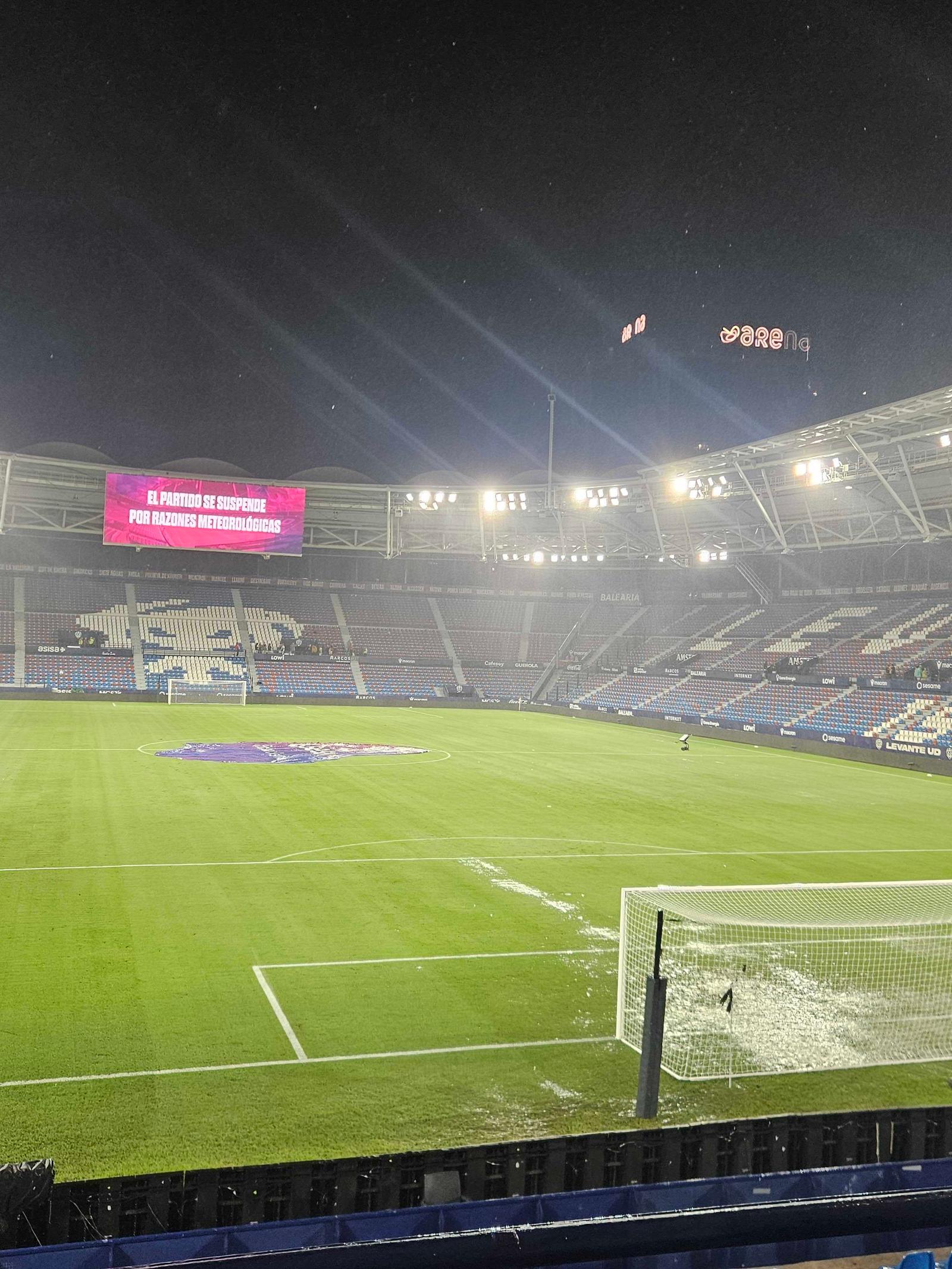
This was inside the stadium about half an hour before the scheduled kick off. A game of football was never going to be played at Levante tonight.
— La Liga London (@LaLigaLondon) September 16, 2026
Guess who came to the stadium in t-shirt and shorts... pic.twitter.com/n1RZXHXyFk
Once inside the stadium, it instantly became clear that the game could not go ahead. Thousands of fans were inside the ground 45 minutes before kick-off, but despite the modernised roof blocking a lot of the rain, the wind was blowing it all around the stadium, soaking everything in sight. One elderly couple were caught directly below a leak in the roof, with their umbrella catching the full brunt of a mini-waterfall.
Ducking into the concourse for shelter until kick-off was the instant move, and this was a decision shared by the majority of fans.
The concourse was bustling with people leading up to the scheduled kick-off time, and many stared in amazement at the rain and lightning hammering their way through the city.
There was no clear announcement in the concourse: word of mouth quickly spread through stewards, staff and fans that the game would not take place, just minutes before it was supposed to start. With limited phone signal and a lot of confusion, we headed back into the stadium bowl, where we were finally greeted with confirmation.
"EL PARTIDO SE SUSPENDE POR RAZONES METEOROLÓGICAS."
"The match is suspended for weather reasons."
About 20 minutes later, the sound of thousands of phones buzzing simultaneously filled the concourse. The government warning, advising people to stay at home and only travel if necessary, was sent out across the city. We received this message inside the stadium. Thanks for the heads up!


Getting out of the ground
With it clear that no football was to take place, focus quickly shifted to how on earth we would get out of the ground and back to the centre of Valencia in the middle of this storm.
Levante allowed everyone to remain in the stadium concourse for a while, with food and drink kiosks open, blankets being handed out to the elderly, and a surprisingly calm atmosphere given the circumstances. Uber and Cabify produced absolutely no results, with the extent of the road blockages in the area not yet fully clear.
We waited in the ground for as long as Levante would let us, before the surprising decision from the police to start ushering everyone out onto the streets, at around 10.30 pm. The rain had not stopped, but suddenly the shelter of the concourse was no longer allowed to be used.
Only after exiting the stadium did we realise what we were in for: the road directly next to the ground was submerged. Cars were struggling as their wheels disappeared below the waterline. People huddled under shelter on the edge of the stadium.
LaLiga decided it was safe to send 15000 people to a stadium in these conditions. This is the road next to Estadi Ciutat De València. pic.twitter.com/l1p5odBZGH
— La Liga London (@LaLigaLondon) September 16, 2026
Texts flooded in about how the metro line was suspended. Taxis were a write-off. The tram was our final hope, and there was a scheduled departure nearby within 25 minutes.
After huddling with over 100 people at the local stop, it became apparent that if the alleged tram was to arrive, it wouldn't be any time soon. It was a pointless endeavour, and we needed a new plan.
The local bar where Levante's grada de animacion (singing section) normally gathers was our nearest point of refuge. Any sense of apprehension about invading private territory quickly diminished. The bar was serving drinks, the fans inside were making the best out of the situation, and some even assisted us in trying to order a taxi. Top people, all looking out for each other.
It was at that point, with Uber deactivated and no taxi company available, that the reality of an hour-long walk back to the centre dawned on us. The rain had calmed down at that point; it could have been a lot worse.
En route to the centre, we were greeted by roads blocked by fallen trees, which had been severed in half by lightning. Some of these trees had smashed through car windows. This storm could have been deadly.
It took an hour to get home, but we were perhaps the lucky ones as residents within relative walking distance. The journeys that Athletic Club fans, and indeed the team, had to go through may have been more tumultuous.
How was this allowed to happen?
Many may wonder why, with the orange alert in place, thousands of fans decided to go to the stadium of their own volition. People have asked me why I didn't simply watch the evening kick-offs in the comfort of my own home.
The reality is that there was no rain at all until within an hour of kick-off. I had paid €50 for my ticket. Some had paid more. Season ticket holders had no assurances that a non-attendance would not count against them for future renewals.
LaLiga had deemed it safe for the game to go ahead, and if the governing body, with access to the warnings and forecasts days in advance, had deemed it safe, then there should be trust that attending the game would not carry a risk of death. Many others and I trusted their judgement that the game would go ahead in the forecasted conditions.
This trust will now be completely eroded for a lot of fans. This is not the first time LaLiga have made such a screw-up, but it simply has to be the last.
With a similar flood warning and a day of extreme rainfall a year ago, Villarreal saw a home game against Espanyol postponed with fans in the ground, in the same kind of circumstances. Valencia's game with Real Oviedo was postponed by one day during a week of heavy rain.
The floods two years ago have left scars in the city. Debates over how the regional government handles the emergency alerts will continue, but the main culprit on this occasion was LaLiga.
If a conversation needs to be had over the risk of a game going ahead, then the game should not take place. The safety of fans has to be the first priority: on this occasion, money and convenience came first.
Levante have now issued refunds to ticket holders and announced that they are preparing a letter to Javier Tebas, the unpopular president of LaLiga, demanding information about the processes which led to thousands of their own fans being stranded in dangerous conditions.
The extent of both the storm and the ridiculous manner in which the postponement was handled may come as a shock to those watching from afar. For those accustomed to the laziness of those in charge of LaLiga, it was more depressing than surprising.
As it stands, there wasn't too much reported lasting damage from the night's events, but LaLiga should count themselves lucky. Lives could have been lost as a result of the weak decision-making surrounding the game, and if they were, the blood would be on LaLiga's hands.
There must now be action. Protocols must be developed for these situations of extreme weather. Fans and their safety must play a bigger part in fixture organisation.
LaLiga must listen to their clubs when confronted with such important decisions. For now, fans experienced inconvienience, but if it happens again, we could be looking at a worse outcome.
Related Topics
Rahul Lakhani